2026 Archives
Reining in the Bulls
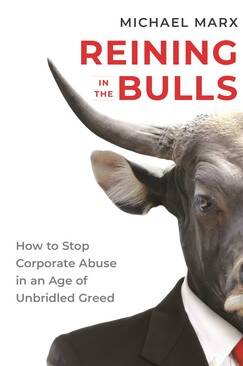

with Michael Marx
Eco 899 18 August 2026
Our topic on this program was gaining control over corporate excess and greed. We interviewed Michael Marx about his book, Reining in the Bulls recently published by Island Press via Princeton University Press. Michael received his doctorate from the University of Wisconsin, and formerly worked for Selection Sciences, Inc., a management consulting firm specializing in employee selection and management training. His clients included Fortune 500 companies like Hewlett-Packard, Transamerica, Pacific Bell, American Express, Memorex, and Fireman’s Fund.But In the early 1990s, Michael transitioned from corporate and legal consulting to environmental activism. He is now the Chief Executive of CorpEthics, which has directed multiple campaigns against major business organizations. Welcome Michael Marx. In addition to learning about how and why he transitioned from corporate consulting anti-corporation activism, we learned of his many, many actions bringing corporations to heel. We also explored the whole question of corporate ethics, and whether successful campaigns have ethical effects beyond the immediate target (they do). We found this an especially interesting interview as Michael suggested ways in which individual activists can engage in these larger efforts and feel the satisfaction of making change.
Learn more about Michael and CorpEthics at corpethics.org.
Learn about the book: Click here.
And listen to the program by clicking here:
Dioxin, Biomass, and Education
with Celeste Garcia and Jean Marquardt
Eco 898 August 11, 2026
Our guests are members and leaders of the Dioxin Education Committee which is fighting plans to bring a biomass generating plant to Oroville. They have many objections: Oroville is already a superfund site due to a previous biomass plant that left behind dioxin, and fierce known carcinogen, and the county has one of the highest cancer rates in the state; the plant would be built in a high poverty area and is thus an example of discrimination and injustice; the previous site has not been cleaned satisfactorily; the City Council is being secretive about the project; the flow of money has not been clarified; and the use of forest thinning products is both a sham and environmentally unsound. Listen to this excellent interview: click here. For more details go to their highly informative website: https://dioxineducation.org/
Bayer Court Decision
and Degrowth
with Tom Reid and an article by Carey Gillam
Eco 844 June 30, 2026
In this program we began by reading an article by recent guest Carey Gillam analyzing the impact of a recent Supreme Court decision favoring Monsanto/Bayer and blocking legal recourse for some victims of Glyphosate/Roundup. She declared that the decision is NOT the "silver bullet" Bayer is seeking to end litigation. Many court cases will continue, but following different legal avenues. Read the article and other news concerning herbicide lawsuits at www.thenewlede.org
Then we spoke with Tom Reid, longtime Chico activist about the concept of "degrowth" rowth and how it can help to place the planet FIRST. He reviewed many of the ways in which capitalism has historically damaged the planet and its people, and how curtailing the notion of "grow or die" could be replaced by "degrow and live," both for the ecological health of the planet and human quality of life.
Listen to the program: https://archive.org/details/844.-bayer-and-tom-reid
Summer Solstice 2026
Eco 843 June 23, 2026
In this program we celebrated the solstice and arrival of summer with some of the history and traditions of this solar event, along with a short story by Nick Joaqui about a wild, women-dominated celebration in the Philippines plus poetry by Mary Oliver, Robert Frost, and Marcus Jackson, the last an ode to Kool-Aid.
Listen: Click here--https://archive.org/details/solstice-celebration-on-ecotopia
Legislative Threats to Democracy
with Eric Nilssen and Kathy Koots
Eco 842 June 16, 2026
Can there ever be an end to Valley's Edge, the suburban sprawl project resoundingly rejected by Chico Voters in a referendum? Apparently not. Our guests were Eric Nilssen and Kathy Koots of Smart Growth Advocates, the organization responsible for the referendum that stopped the Valley's Edge development in the foothills east of Chico. They reported on the introduction of AB 2676 by James Gallagher, which passed the California Assembly in May of this year by a vote of 43-17. Ostensibly the bill is about preventing local citizen movements from restricting housing. In fact, it is directly aimed at the Valley's Edge referendum and would outlaw past and future citizen efforts to stop sprawl. They discussed the damage that would be done in revoking the will of the people and reigniting [sic.] controversy over this fire-prone development of trophy homes. They also discussed how Smart Growth Advocates is meeting with legislators and preparing analyses of the bill. Listen to the program, which ends by listing ways in which concerned citizens can fight the new measure.
Listen to the program: Click here.

Fire Prevention along the Creeks
with Steve Evans
Eco 841 June 9, 2026
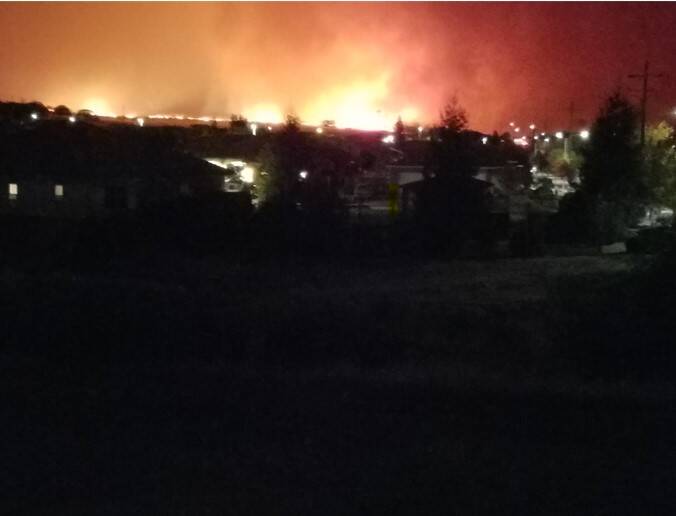
Steve Evans is a longtime activist in Chico, dating back to the founding of the Butte Environmental. The day before the interview, he and Susan went on a plane ride above Mill and Deer Creeks, from Chico up to Lassen Park. In this interview, Steve talked with us about fire prevention, including errors of fire suppression and some current issues with newly proposed fire prevention actions, most notably, plans to use Glyphosate/Roundup close to the creeks. Listen to this important interview!
Glyphosate, Bayer, and the Courts
with Carey Gillam
Eco 840 June 2, 2026
It was a pleasure for us to welcome Carey Gillam to Ecotopia. We’ve interviewed her twice before on lawsuits and debates over Glyphosate, the principal ingredient in Monsanto/Bayer’s Roundup weedkiller (and likely people killer). She is one of the founders and Editor-in-Chief of New Lede (L-E-D-E, a journalism term for the head or lead of a story). The New LEDE is an independent news source that focuses on environmental issues with the aim of presenting fact-based analysis. Carey has been an investigative journalist for over thirty years, and her two book titles give a good overview of our discussion in this program: “Whitewash – The Story of a Weed Killer, Cancer and the Corruption of Science” and “The Monsanto Papers: Deadly Secrets, Corporate Corruption, and One Man's Search for Justice” (about a cancer victim’s attempts to hold Monsanto accountable). We spoke about two current court cases that are putting to a test some 64,000 lawsuits against Bayer for the carcinogenic properties of Glyphosate. At issue in the Supreme Court is whether states have the right to insist on warning labels on the product (where the government supports a national label that would likely minimize the dangers and thus weaken the lawsuits). A second case being heard in a Circuit Court in St. Louis challenges a proposal by Bayer to terminate all present and future lawsuits with a 6.7 billion dollar settlement, which the plaintiffs argue lets Bayer off the hook, pays too much to lawyers and too little to claimants, has a complex "opt out" option, and prevents those who become ill in the future to sue. These are complicated arguments and Carey explains them in depth. You really ought to listen to the full broadcast to appreciate the full details of the cases against Roundup, which is widely used in Butte County.
Listen to the program: https://archive.org/details/carey-gillam-on-ecotopia. Learn more about Carey and her work: https://careygillam.com/ Learn more about and subscribe to the New LEDE: www.thenewlede.org


BumbleBees and Art
with John Whittelsey and Brianna Willams
Eco 839 May 26, 2026

John and Brianna are members of Friends of Ahart Herbarium at Chico State University. They spoke about upcoming workshops they will be conducting. Though the workshop dates may have passed by the time you read this, they offered valuable insights into their interests. John is a longtime naturalist and former landscape designer who now has a passion for BumbleBees. He told us all sorts of interesting info about BBees: what they are, how they live, the number of species in NorthernCalifornia, and much more. Brianna told us about botanical art: how it differs from traditional painting, its history before and after photography, the the techniques artists employ to precisely render all kinds of plants. A fascinating pair of interviews. Listen to the recording.

Butte County Supervisor Primary
with Marianne Paiva
Eco 838 May 19, 2026
Marianne Paiva is a candidate for Butte County Supervisor in District 2, which covers the northernmost area of the county.
She's a Chico State social scientist who, among other things, has done important work documenting the traumas and ongoing concerns of fire victims, notably the Camp Fire of 2018. Her campaign focuses on water issues, disaster preparation and response, and urban sprawl, and she spoke articulately about these issues (and more). We always have to do a disclaimer for KZFR: that the opinions expressed do not necessarily represent those of the station, the management, etc. In this case, we enthusiastically endorse Marianne. We do not, alas, live in her district, but we would enthusiastically vote for her if we did.
Listen to the program.
Climate Changed
with Pablo Dias
Eco 837 May 5, 2026
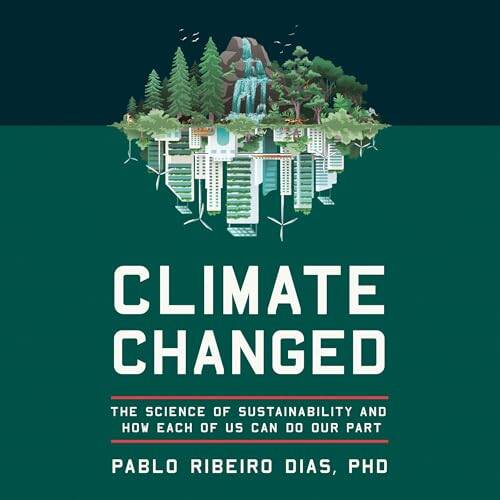
Our topic in this program was “the science of sustainability and how each of us can do our part.” That’ the subtitle of a book titled Climate Changed, by our guest Pablo Dias. The book is an in-depth and even-handed exploration of the history and science of our environment and will not only help us clear the air about some controversial issues, but offers practical guidance about taking meaningful action.
Pablo holds dual PhDs from Universidade Federal do Rio Grande do Sul in Brazil and Australia’s Macquarie University in e-waste recycling. He also has a master's degree in photovoltaic recycling. He’s a professor and researcher and also a cofounder of SOLARCYCLE, advocating for solar panel recycling and circular economy solutions.
He strongly stresses the need for us to use science findings to reach decisions. (We noted that “science” is a word much bandied about in the press, and there seems to be a kind of vague popular appreciation of it.) He, of course, talked about substantial science and presented Greta Thunburg as an example of an informed activist. He mentioned Life Cycle Analysis as a way we can calculate our impact on the earth (one example being Carbon Footprint analysis--how many planets would it take to support my lifestyle?).
In terms of taking action, he recommend a number of “small steps” individuals can take in their own lives--less meat, driving less--and argued that such steps can also lead to big steps such as pressuring the government (local, state, federal) and corporations, becoming an activist, supporting action passively through donations, educating people, and many other approaches.
Here are some links he forwarded for listeners who'd like to pursue these ideas:
5 Min Sustainability Reset (free for your listeners,
https://www.gapminder.org/ (Dollar Street and others)
Citizen science: Carbon footprint & the Food calculator
Also check out his website: www.pablodias.org
The book is available from Otterpine Books, Amazon, and his website.
And listen to the program, which will give you a new sense of optimism and opportunity in the battles to save the planet.
Feathers, Fur, or Fins
Students from Sherwood Elementary School
Eco 835 April 27, 2026
In preparation for the Butte Environmental Council's 47th Endangered Species Faire, elementary school kids made paper mache puppet models of endangered species. In this program, students from Sherwood Charter came on the air to describe their puppets, tell about their endangered animal and the threats to it, and what they learned from the project. They closed by singing Don Harlow's "Feathers, Fur, or Fins": "they're mother nature's marvels, from the ant up to the whale." Sherwood teacher Marlo Knox, a veteran of a number of puppet making projects, was on hand to discuss how and why this is a valuable addition to the curriculum. Listen to the program.
Electricity for Chico
with Addison Winslow
Eco 833 March 24, 2025
City Council member Addison Winslow spoke to us articulately and in great detail about the sources of "juice," historically and today, and how some communities are departing the monopolistic power companies to negotiate power that may well cost less and be "greener" than previously. He explained how power systems work across the country (and in some other countries) and gave examples of ways the system can be adjusted or changed. He is particularly interested in the ways our neighbors in Oroville are working to create one of these alternatives and shared a memo he has written to his colleagues on the Council urging discussions with Oroville and research into the possibilities and potential for Chico.
Listen at KZFR.org > Archives > Ecotopia
Photo by Haami Nasir on Unsplash

Our guests on the program, Sandy and Durl, are doing remarkable work growing, harvesting, and processing flax, the amazing plant that is used for linen. Their goal is to produce cloth locally, and in this program, they described the history and present state of their efforts. Along the way, they have developed international contacts who share that interest and developed tools to aid in harvesting and processing flax. Check out their website: https://goldenstatelinen.com/ Listen to their inspiring story: https://archive.org/details/832-flax-recording.

Water Issues: AquAlliance
with Barbara Vlamis
Eco 831 March 10, 2026

Our guest this evening by phone was Barbara Vlamis, Executive Director of AquAlliance, which has as its mission: “to defend northern California waters and to challenge threats to the hydrologic health of the northern Sacramento River watershed.” Barbara has been a frequent guest on this program, and we value her deep understanding of water in our area and her commitment to protecting NorthState water resources.
AquAlliance is in the process of filing something called a “a petition for writ of mandate” against Governor Newsom.
March 6, 2026: AquAlliance and California Sportfishing Protection Alliance have filed a petition for writ of mandate brought to compel the mandatory duty of Respondent Governor Gavin Newsom to declare an end to the Drought State of Emergency for the Sacramento River Basin. The petition further seeks to compel the State Water Resources Control Board to cease compliance with the provisions of Drought Emergency Executive Order N-7-22, which suspends compliance with the California Environmental Quality Act (CEQA) when considering applications for temporary groundwater recharge permits.]
This a complex issue and we asked Barbara to explain the relationship between ending the drought declaration and reauthorizing CEQA for water recharge projects. Be sure to listen to this informative and important interview. Click here: https://archive.org/details/barbara-valamis-on-ecotopia
Water Issues: Tuscan Aquifer
with Susan Schrader and Marty Dunlap
Eco 830 March 3, 2026
A group of concerned water activists sponsored two groundwater forums in the month of March. Organizers of the forums invited community members who want to learn more about our water: “Want to know more about the water that flows from your tap, that grows the food you eat, that supports our urban forest and riparian wetlands? Where it comes from, how much we use, how we can protect and sustain it?” Although you may have missed the forums, this interview covers many of the same questions. It's well worth a listen. Our interviewees were Marty Dunlap and Susan Schrader, organizers and participants in the Water Forums. Marty Dunlap, a 50-year resident is well known for her environmental work in Butte County. She is a public interest attorney, and has been involved with water issues in Northern California for 20 years. Susan Schrader is a local domestic well user and environmentalist who has become engage in water monitoring activities as a citizen activist. In addition to discussing the forums themselves, we learned a good deal about the nature of the Tuscan aquifer, it's governance by Butte County and the Sustainable Groundwater Management Act (SGMA), and a number of issues and problems perceived by well owners and all citizens in Butte Count.
Listen to this excellent interview: Click here.


Butte Fire Safe Council
with Taylor Nilsson
Eco 829 February 24, 2026

Taylor Nilsson is Executive Director of the Butte Fire Safe Council. He described the mission of the Council in preventing wildfires as well as helping victims of fires. The organization has numerous partners in the Northstate and offers workshops on creating firesafe spaces, teaching kids the principles of smart living in fire country, and hands-on projects involving land restoration and sensible fire ecology. Volunteers are always welcome to participate in those programs. To learn more about the Council and its work, visit the website at buttefiresafe.net. Listen to the program: click here.

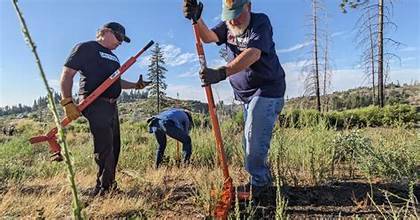
River Partners
with Michael Rogner
Eco 828 February 17, 2026


In this program we learned about River Partners, a restoration nonprofit that, founded in 1998, has channeled $160 million toward restoration of nearly 20,000 acres of river corridors throughout California. Our guest was Michael Rosner. He is the director of Restoration Science for River Partners. He told us about some of the major accomplishments of River Partners since its beginning as Sacramento River Partners, most notably, the San Joaquin Dos Rios State Park recover and Southern California Expansion. Other topics and projects we discussed were:
- Salmon side channel restoration;
- Battle Creek farm recovery and rewilding;
- Planting 15 million milkweed through 2030;
- Motus stations installation to track some large and small creatures;
- Tribal engagement; and
- Science partnerships.
See the excellent and informative River Partners website for more information: riverpartners.org
Listen to this engaging and informative interview: Click here.
Treetop Permaculture
with Matthew Trumm
Eco 827 February 10, 2026
We've long been impressed by Matthew Trumm and his work in permaculture and fire resilience. He is committed to creating a better reality through the Permaculture process, including earth care, people care, future care, and the return of surplus. He grows all kinds of stuff, works as a landscape designer and engineer, and does workshops in the schools and for adult populations. In this episode he described his work teaching permaculture in the schools, with the kids eventually selling some of their own products. And he described a series of upcoming workshops that comprehensively explore Permaculture principles. Learn more about his work at treetopppermaculture.org. Listen to the program: Click here.
Forest Therapy
with Blake Ellis
Eco 826 February 3, 2026

We spoke with Blake Ellis, program manager for the Ecotherapy Program at the Big Chico Creek Ecological Reserve. She is Program Manager for the Chico State Ecotherapy Program with the Big Chico Creek Ecological Reserve. She is also an Associate Clinical Social Worker and a certified Forest Therapy Guide. We asked her to describe "forest therapy" and how she is providing it in the Chico area at the Ecological Reserve.
Listen to the program: https://archive.org/details/ecotopia-02-03-2026-17-00_202602
Chico Greenery
with Sherri Scott and Shelly Miller
Eco 825 January 27, 2026

In this program, our focus was on gardening. We began by talking to Sherri Scott, the founder and owner of Harvests and Habitats, a local Chico nursery. Sherri is spearheading the 16th Annual Seed and Scion Swap and also gave us all sorts of good tips on acquiring plants for your garden and making them thrive. And then we talked with Shelley Miller. She's part of the Butte County Local Food Network team. Shelley Miller is facilitator of flourishing futures and the GROWN educational manager. She'll tell us a bit about BCLFN and GROWN, a program that focuses on connecting youth and gardening.
Listen to the program: Click here.
An Interview with Ernest Callenbach

This is an interview we conducted with the author of Ecotopia, Ernest Callenbach, who died in 2012. In it, he gives some of the background of writing the novel, responds to questions about some parts of the book, and offers fresh insights into a world that desperately needs an ecotopian perspective. To hear this outstanding interview, click here.
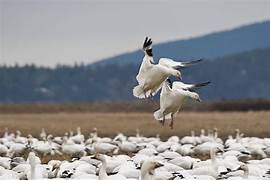
In this edition of Ecotopia, we spoke with Paul Kirk, the coordinator of this year's Snow Goose Festival and a member of the board of Alta-Cal Bird Alliance, which sponsors this annual event. To celebrate the arrival in the Northstate of a gazillion snow geese, who settle in rice fields and ponds, the Festival sponsors a four-day festival including field trips, workshops, and a grand banquet. Paul filled us in on the amazing range of workshops and other events and, off the cuff and drawing on his own experience as a birder, told us what people might expect to see on the field trips. Listen to the program. Click on the link.
Multisolving
with Elizabeth Salwin
Eco 823 January 9, 2026

Beth has dedicated her career to the theory and practice of creating change in complex systems. She trained in system dynamics computer simulation with Donella Meadows at Sustainability Institute. At the Institute, she also supported sustainability leaders from around the world as they used system approaches to conserve land, enact climate policy, restore rivers, promote healthy communities, and more.
Prior to founding Multisolving Institute, Beth co-founded the think tank Climate Interactive to develop tools for grappling with the complexity of the climate system. She led Climate Interactive’s efforts to integrate measures of equity, health, and well-being into decision-support computer simulations.
Beth writes and speaks about multisolving and leadership in complex systems for both national and international audiences. Her writing has been published in Non-Profit Quarterly, The Stanford Social Innovation Review, U. S. News, The Daily Climate, and System Dynamics Review. Her work has been widely covered including in the New York Times and the Washington Post. Her book Multisolving: Creating Systems Change in a Fractured World was published by Island Press in late 2024.
She has two adult daughters and lives in rural Vermont where she and her husband grow as much of their food as they can manage.